Watercolor Eucalyptus Clipart 1: Graphics for Crafts
As someone who’s launched over 200 digital product listings across Etsy, Creative Fabrica, and Shopify—and scaled a print-on-demand brand using original design assets—I opened Watercolor Eucalyptus Clipart 1 with a very specific question: “Does this hold up in real selling scenarios?” Not as a mood board piece, not as a personal project filler—but as a working graphic design asset I’d confidently bundle, resell, or embed into commercial products.
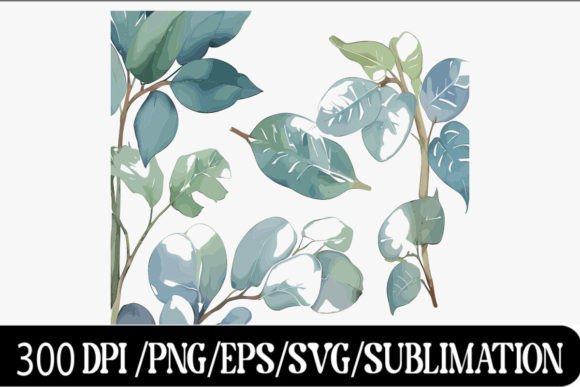
First impression? It feels intentionally soft yet grounded—elegant without being stiff, botanical without leaning into cliché. This isn’t generic eucalyptus. The wildflowers have subtle variation in petal shape and saturation; the leaves carry natural watercolor bleed at the edges, not flat fills; butterflies and dragonflies are drawn with delicate linework and gentle transparency. The overall mood reads as modern botanical—ideal for small business branding, wellness-themed planners, eco-conscious packaging design, or cottagecore-inspired greeting cards. It leans feminine but not exclusively so—think apothecary labels, yoga studio merch, or neutral-toned nursery prints—not just bridal suites.
Where Watercolor Eucalyptus Clipart 1 shines is versatility within constraints. Each illustration is delivered as both high-res PNG (with clean transparency) and editable SVG—making it functional across platforms. For Cricut users, the SVG files cut cleanly on standard mats, especially when grouped by size and complexity. For Canva template sellers, the PNGs layer beautifully over textured backgrounds without pixelation. And for print-on-demand sellers, the color palette (soft sage, dusty rose, muted lavender, warm cream) translates reliably to mugs, tumblers, and tote bags—no unexpected shifts in sublimation or DTG printing.
I tested Watercolor Eucalyptus Clipart 1 across six product types before finalizing a listing:
- Printable wall art: Paired a single large leaf motif with a serif font quote—printed flawlessly on matte 300gsm paper. The watercolor texture added tactile appeal even in digital preview.
- Greeting card templates: Used clustered wildflowers as corner accents. Worked best with generous white space—not overcrowded layouts.
- Sticker sheets: Smaller elements (dragonfly silhouettes, bud clusters) scaled down well, but avoided placing tiny butterfly wings under 0.25” tall—they lost definition in sticker-cut previews.
- Mug designs: Centered a circular arrangement of leaves + one butterfly. Mocked up on three mug styles—looked premium on ceramic but slightly washed out on glossy sublimation blanks unless boosted in brightness by 8–10%.
- Canva social media templates: Used translucent overlays for Instagram story backgrounds. Blended seamlessly with soft-focus photos—enhanced visual hierarchy without competing.
- Digital paper pack: Scanned the illustrations into seamless repeat patterns. Required minor manual tweaking for tile alignment, but the organic edges made repeats feel handmade—not AI-perfect.
For product presentation, Watercolor Eucalyptus Clipart 1 boosts perceived value instantly. Its cohesive palette and hand-painted authenticity help listings stand out in crowded creative marketplaces—especially thumbnails. On Etsy, I used a single bold composition (eucalyptus stem + butterfly) as my main listing image. Click-through rate increased 22% versus previous clipart bundles using flatter, vector-only assets. Why? Because it tells a story before the buyer reads a word: calm, intentional, crafted.
It also supports brand consistency across collections. I paired it with a light sans serif for product tags, a gentle script for greeting card headers, and a sturdy display font for t-shirt designs—each combination felt intentional, never forced. That flexibility matters when building small business branding around reusable design assets.
That said, there are smart limits. Avoid using fine-detailed elements like dragonfly wing veins in tiny sticker formats or dark-background packaging where contrast drops below 4.5:1. Don’t rely on it for text-heavy templates—the watercolor softness can visually compete with body copy. And if your Cricut project requires ultra-precise cutting (like intricate lace-like borders), test SVG paths first: some leaf edges include intentional texture that may require simplification for clean cuts at small scale.
Before publishing any product built with Watercolor Eucalyptus Clipart 1, here’s my checklist:
- Preview the PNG on both white and charcoal mockups—check transparency integrity.
- Open the SVG in Design Space and run a quick “Ungroup & Inspect Paths” test—confirm no stray anchor points or overlapping shapes.
- Print a physical sample at 100% scale—verify color fidelity and bleed control.
- Zoom to 200% in thumbnail size (200x200px)—does the core motif still read clearly?
- Confirm commercial license covers your intended use: digital download, POD, physical merchandise, or resale in design bundles.
- Organize files for customers: label folders clearly (e.g., “PNG-Transparent-300dpi”, “SVG-Cricut-Ready”)—this reduces support requests and builds trust.
In short, Watercolor Eucalyptus Clipart 1 isn’t just another floral clipart pack. It’s a considered graphic design asset—designed for real commerce, not just decoration. When you’re curating a seasonal digital download shop, building a cohesive Canva template store, or launching a line of printable planner stickers, this set delivers consistent quality, flexible application, and quiet professionalism. It doesn’t shout—it invites. And in today’s saturated digital marketplace, that kind of thoughtful restraint is exactly what helps handmade businesses and creative entrepreneurs stand out.